
12 Private Airports Nobody Talks About (And Why Brokers Route You Through Them)
The airline map has maybe two hundred meaningful nodes worldwide. The private jet map has thousands. These twelve are where the volume, the deals and the operational headaches actually live.


Ask a broker to fly you to Paris and they will not send you to Charles de Gaulle. Ask for New York and it will not be JFK. Ask for Los Angeles and it will not be LAX. The private jet network runs on a parallel set of airports built specifically for general aviation, and most of them are 20 minutes closer to the city than the commercial hub, half the parking cost of the airline field, and a different world in terms of what they can and cannot handle. Here are twelve of the ones that matter most in 2026.
1. Paris-Le Bourget (LFPB)
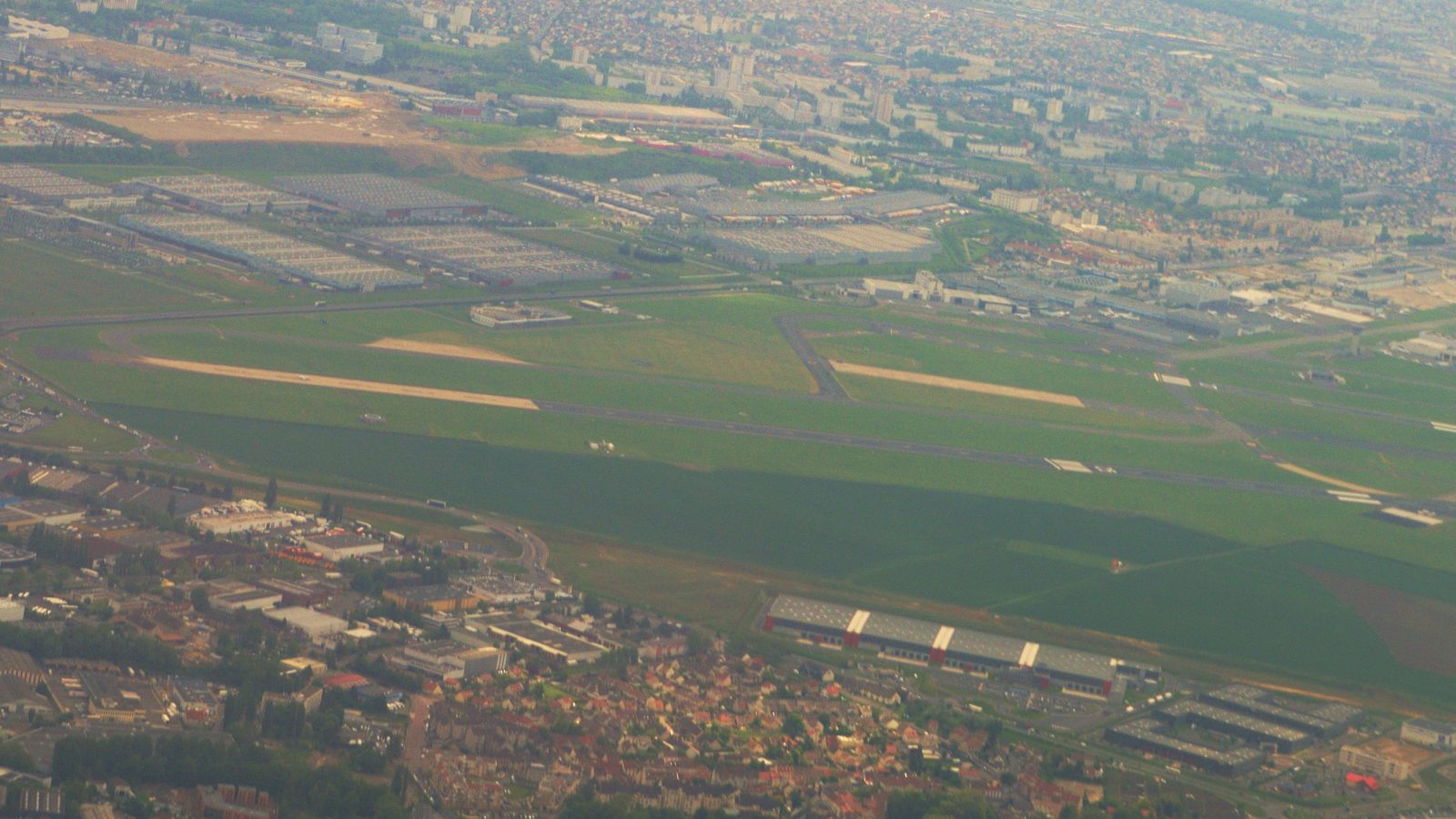
Four runways, longest 07/25 at 9,813 ft, then 03/21 at 8,740 ft and 09/27 at 6,051 ft. It is 12 km northeast of central Paris, GA-only, and the busiest business aviation airport in Europe - 57,342 total movements in 2025 versus 57,385 in 2024, and per Groupe ADP data published 12 October 2026, 67,200 IFR business aviation movements in the year to September 2026, up 7% and the highest annual figure ever logged at LFPB.
The constraint is parking, not movements. In the first ten days of October 2026, 1,840 arrivals produced 421 aircraft (23%) that had to reposition empty to Toussus-le-Noble for overnight parking. Four FBOs: Signature (largest, 28% of overnight parking after its 2023 ramp expansion), Advanced Air Support (in the former Dassault FBO since 2021), Jetex (1,800 m² flagship terminal opened May 2025) and Aviapartner Executive (12% share, most central terminal). Le Bourget cannot take airliner-style charters over roughly 25 seats.
2. Farnborough (EGLF)
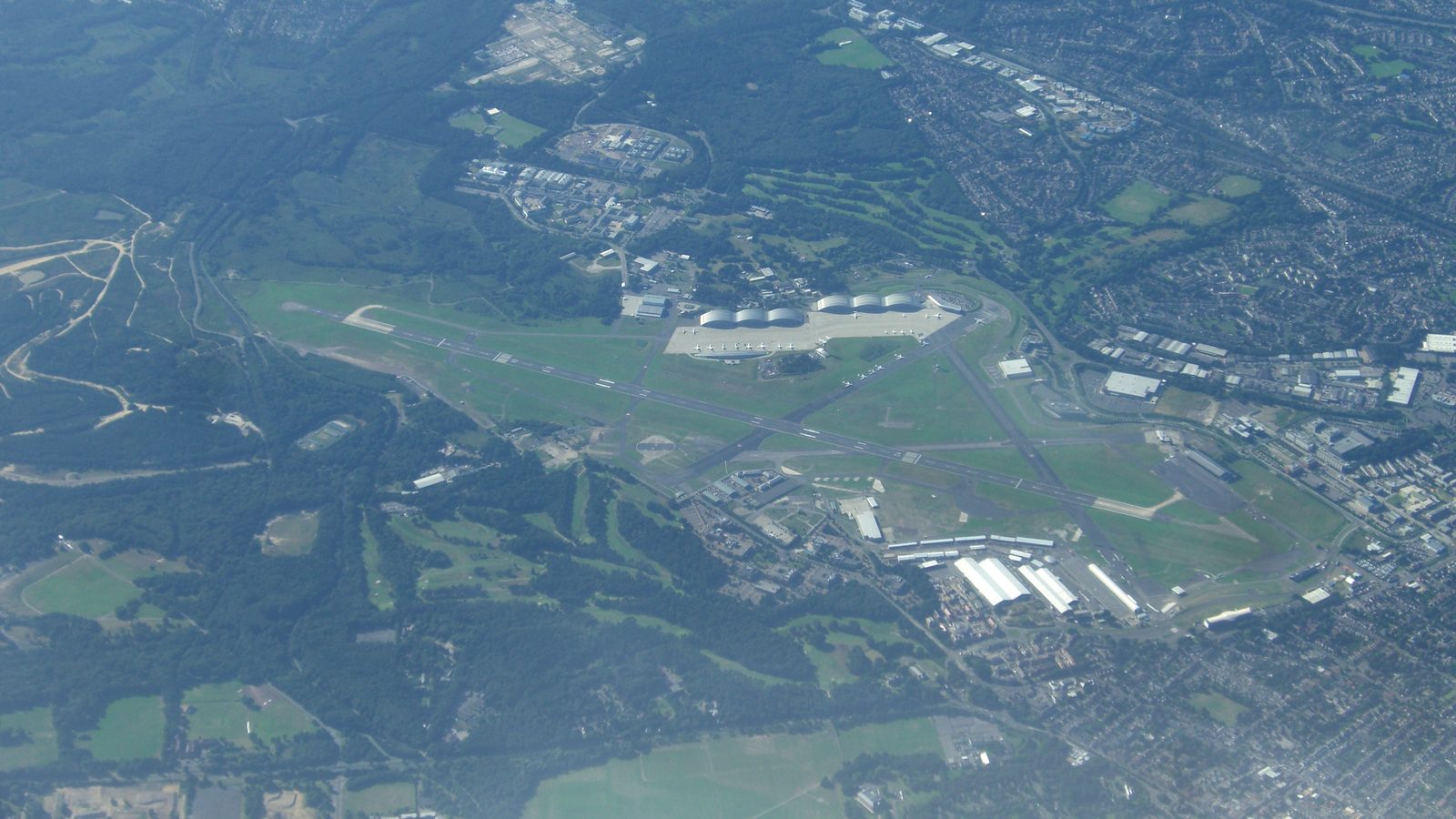
Purely business aviation with no scheduled commercial service, a single FBO handling every movement on the field, on-field CBP/UK Border Force, 310 hectares (770 acres), 35 miles southwest of central London, and 60-90 minutes' drive to the centre. SkyAccess calls the FBO widely considered the best in Europe. 2025 activity: 30,427 reportable movements (8,605 at weekends) against permitted caps of 50,000 and 8,900, with 1,040 movements by aircraft of 50-80 tonnes; the CAA logged 31,316 total movements at Farnborough in 2025.
Residents include Gulfstream's 225,000 sq ft London Area Service Centre, able to accommodate up to 13 large-cabin aircraft; Dassault Aviation Business Services certified on over sixty aircraft types; FlightSafety International; and TAG Global Training. In 2024 1,007 movements exceeded 50 tonnes MTOW and 28 movements carried racing horses.
3. Teterboro (KTEB)
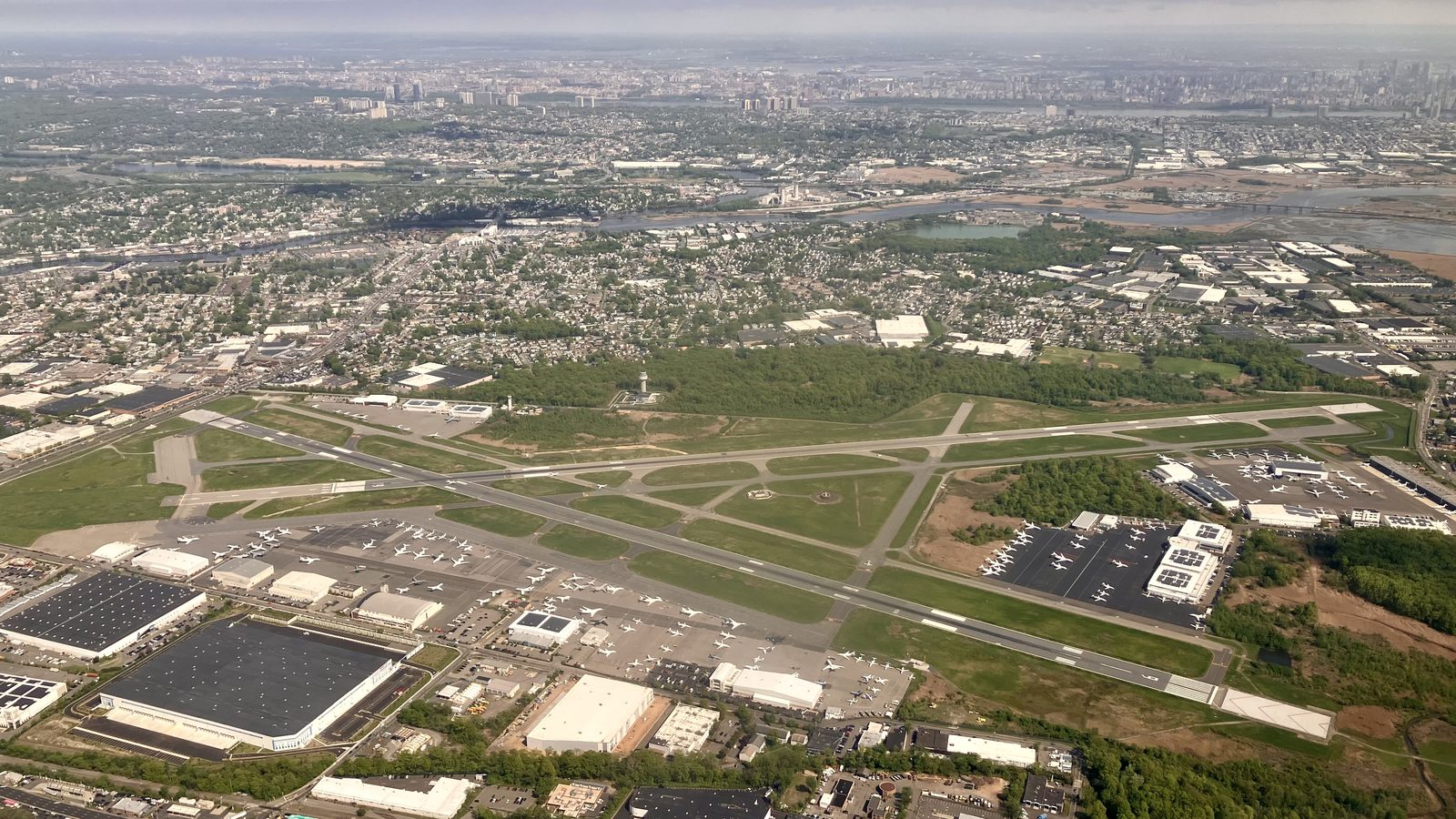
172,499 total operations in 2024. In 2023, 171,460 operations of which 85% (146,649) were jets. March 2025 alone saw 13,779 movements (+3%) and 5,293,995 gallons of fuel (+5%). Traffic is projected at about 177,000 takeoffs and landings in 2024, roughly 488 a day, up 21% since 2009.
Brokers pick it because it is just 12 miles from the heart of New York. It was the single most active empty-leg origin airport in the US on 2 August 2026, with 6 listings.
4. Van Nuys (KVNY)
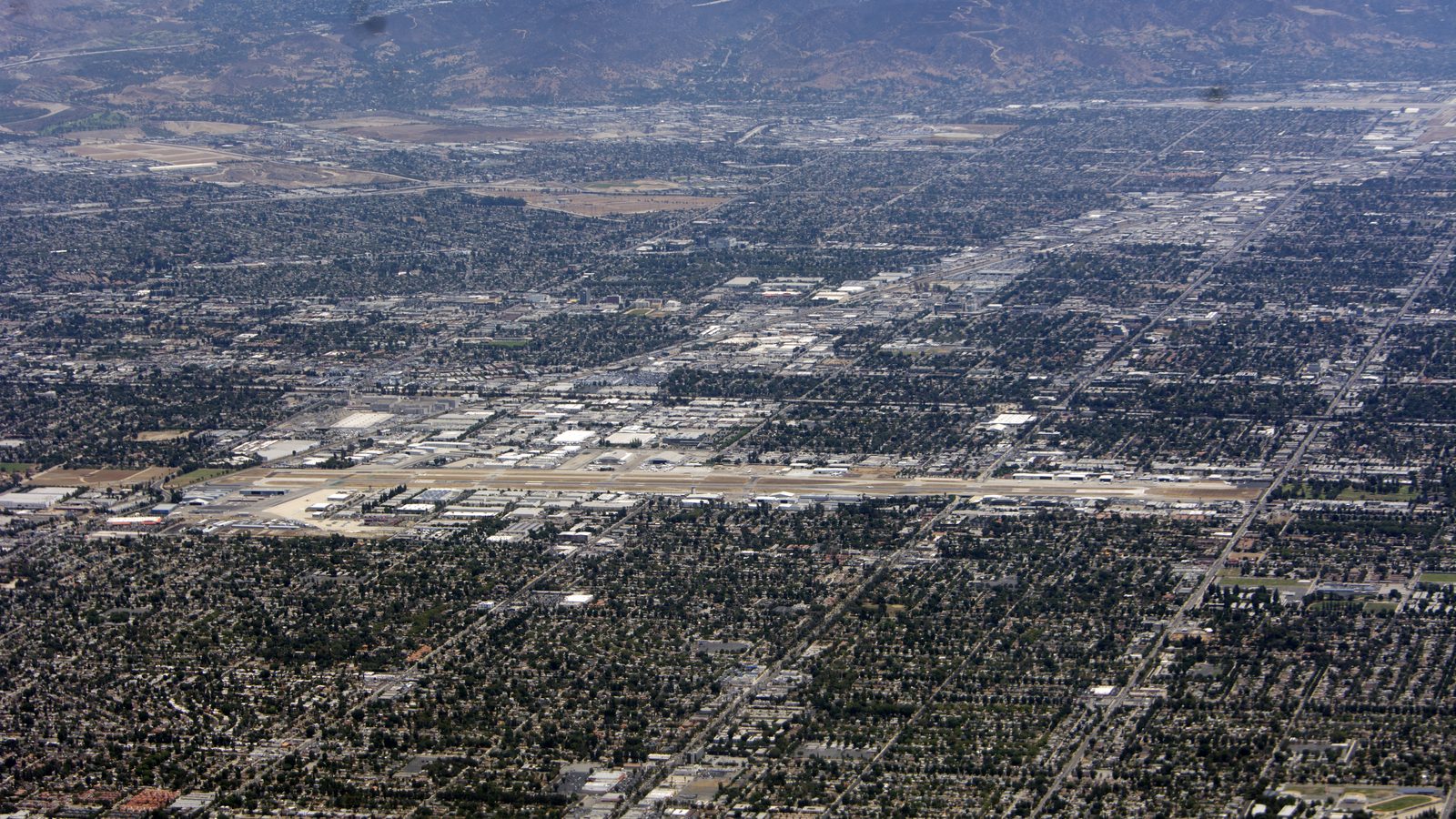
The Busiest General Aviation Airport in the U.S., 730 acres, with 69,553 jet operations recorded in 2022. It averages over 217,000 takeoffs and landings annually and hosted over 330,000 operations in 2024 with 200-plus aviation businesses on field. Four FBOs on the airport directory: Clay Lacy Aviation, Castle & Cooke Aviation Services, Signature Flight Support, Jet Aviation. Clay Lacy markets it as Los Angeles' most exclusive aviation facility with US Customs, 24/7 protection and an onsite FAA Part 145 repair station.
The practical case: 3 minutes to the FBO on arrival and on the 405 in under 10 minutes, versus a 20-minute taxi and 45 minutes to clear the loop at LAX.
5. London Oxford (EGTK)
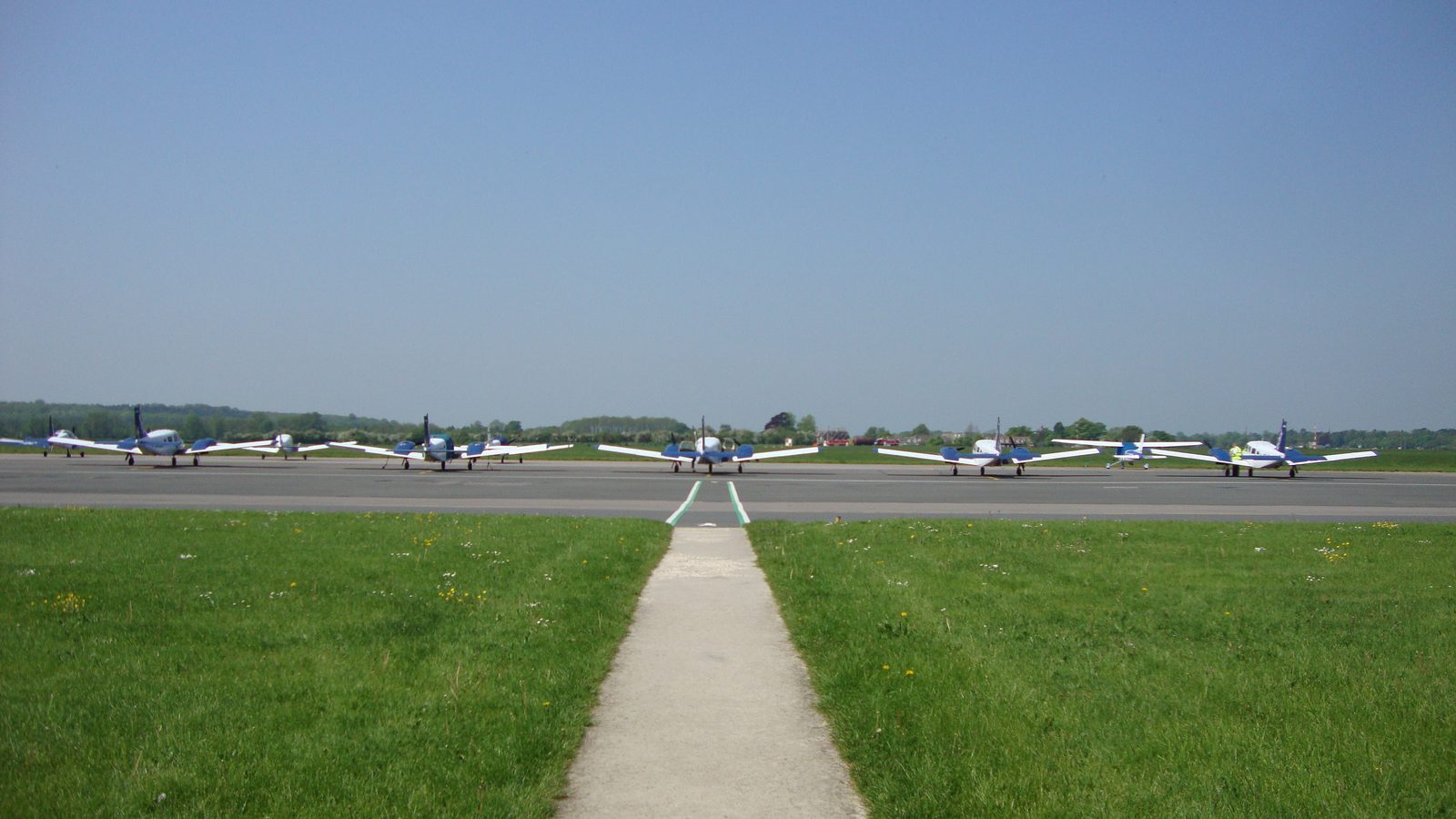
Runway 01/19 at 1,552 m (5,092 ft) x 30 m, Code 3C with ILS Cat 1, unconstrained by slots, operating 06:30-22:30 weekdays, following an earlier 10% licensed runway extension from 1,200 m to 1,319 m. The CAA recorded 226 business aviation movements at Oxford in December 2025. Brokers pick it precisely because there are no slots to fight over on London days when Farnborough and Luton are full.
6. Nice Cote d'Azur (LFMN)
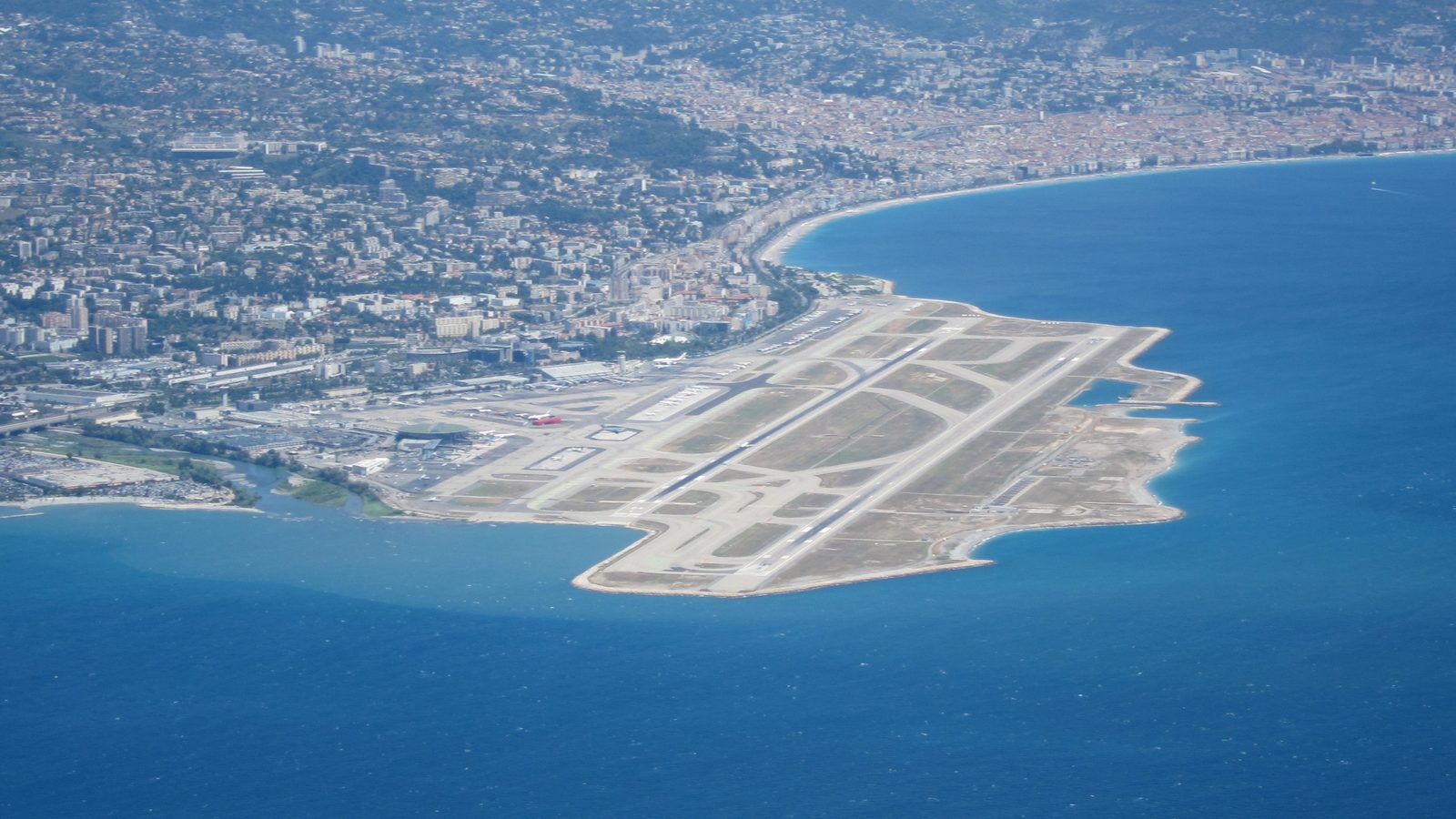
172,949 commercial and private movements in 2025, up 2.1% on 2024, with a 1,510 m² Business Aviation Terminal inaugurated in March 2010. It is the second-busiest European business aviation airport after Le Bourget, ahead of Geneva.
Its unique asset is the onward helicopter leg. BLADE sells by-the-seat H130 charters Nice-Monaco in 7 minutes from EUR 195 a seat, against road travel that can take more than an hour, with ground transportation included between helicopter and connecting flight.
7. Cannes-Mandelieu (LFMD)
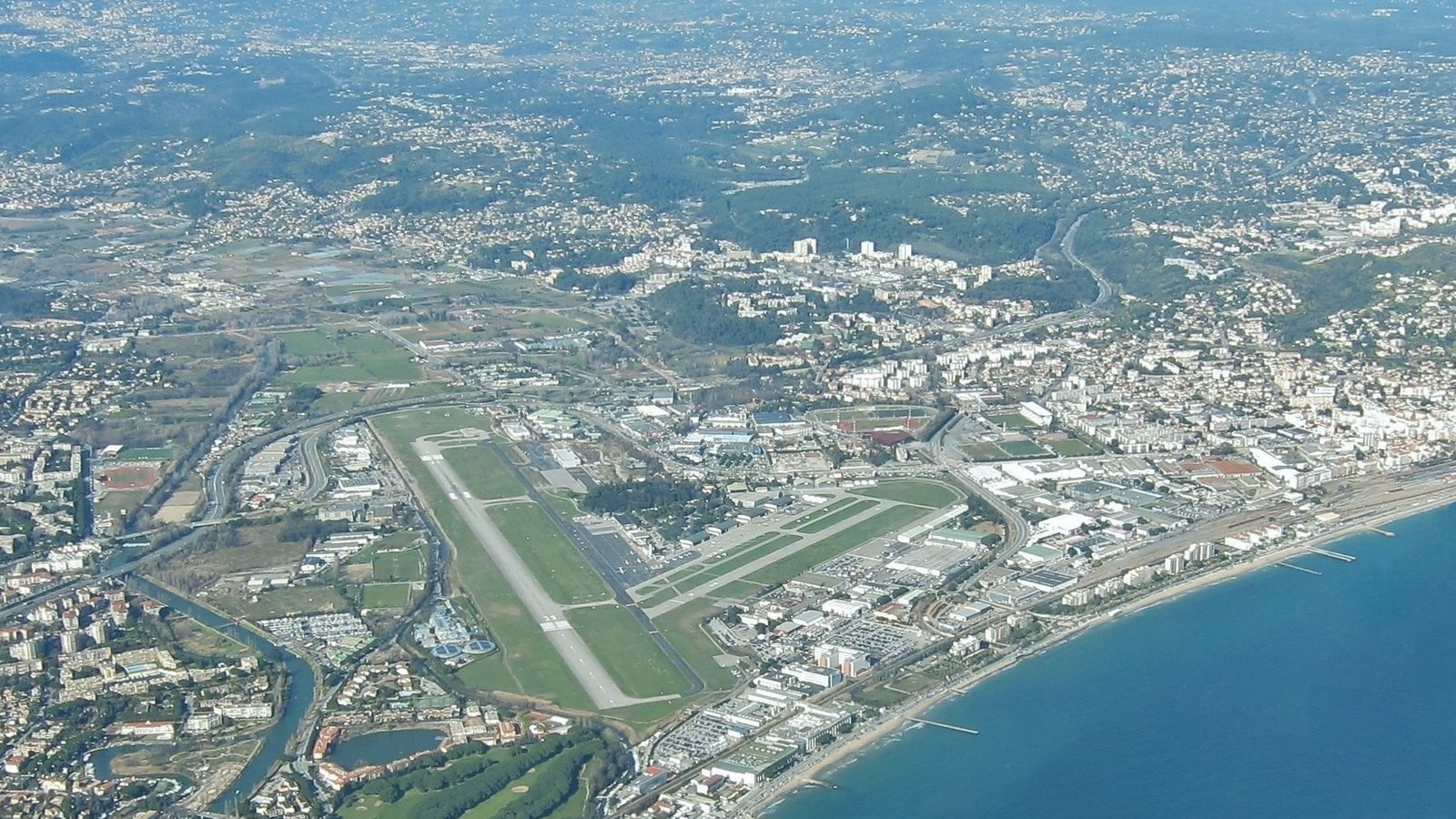
Longest runway 17/35 at 5,052 ft x 148 ft, with NO NIGHT OPERATIONS, a mandatory pilot web briefing and a noise-sensitive environment, plus a 35-tonne maximum weight. That weight cap is the whole story: it filters out heavy and ultra-long-range metal, so brokers route super-light and midsize jets here and send the Globals to Nice.
8. Sion (LSGS)
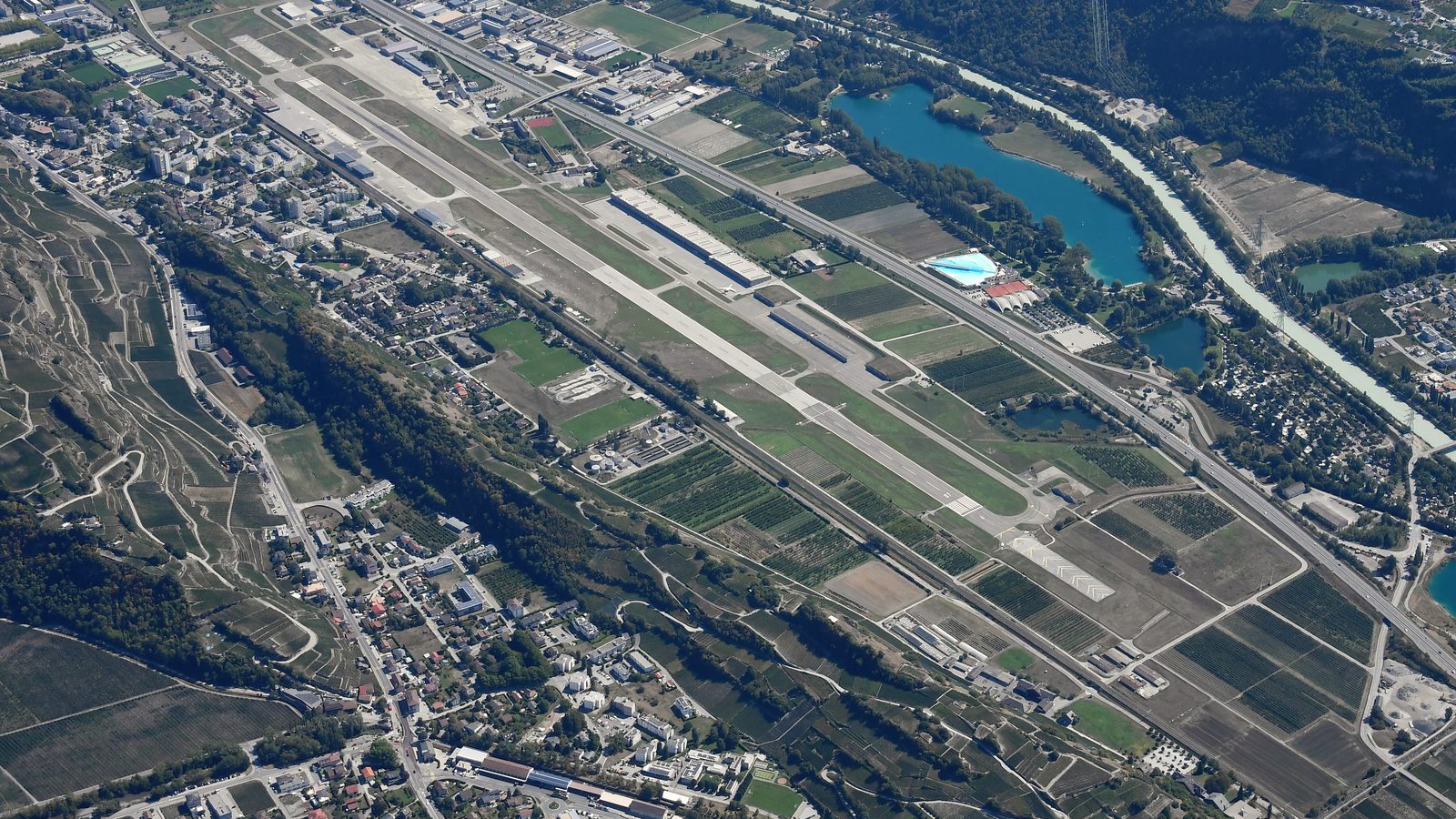
Single runway 07/25 at 2,000 m x 40 m at 1,582 ft elevation, with an RNAV (RNP 0.3) approach on runway 25 introduced on 15 February 2016. AC-U-KWIK lists it as 6,562 x 131 ft. The RNP approach is why it works as a Verbier and Crans-Montana gateway in weather that closes lesser Alpine fields.
9. Bern-Belp (LSZB)
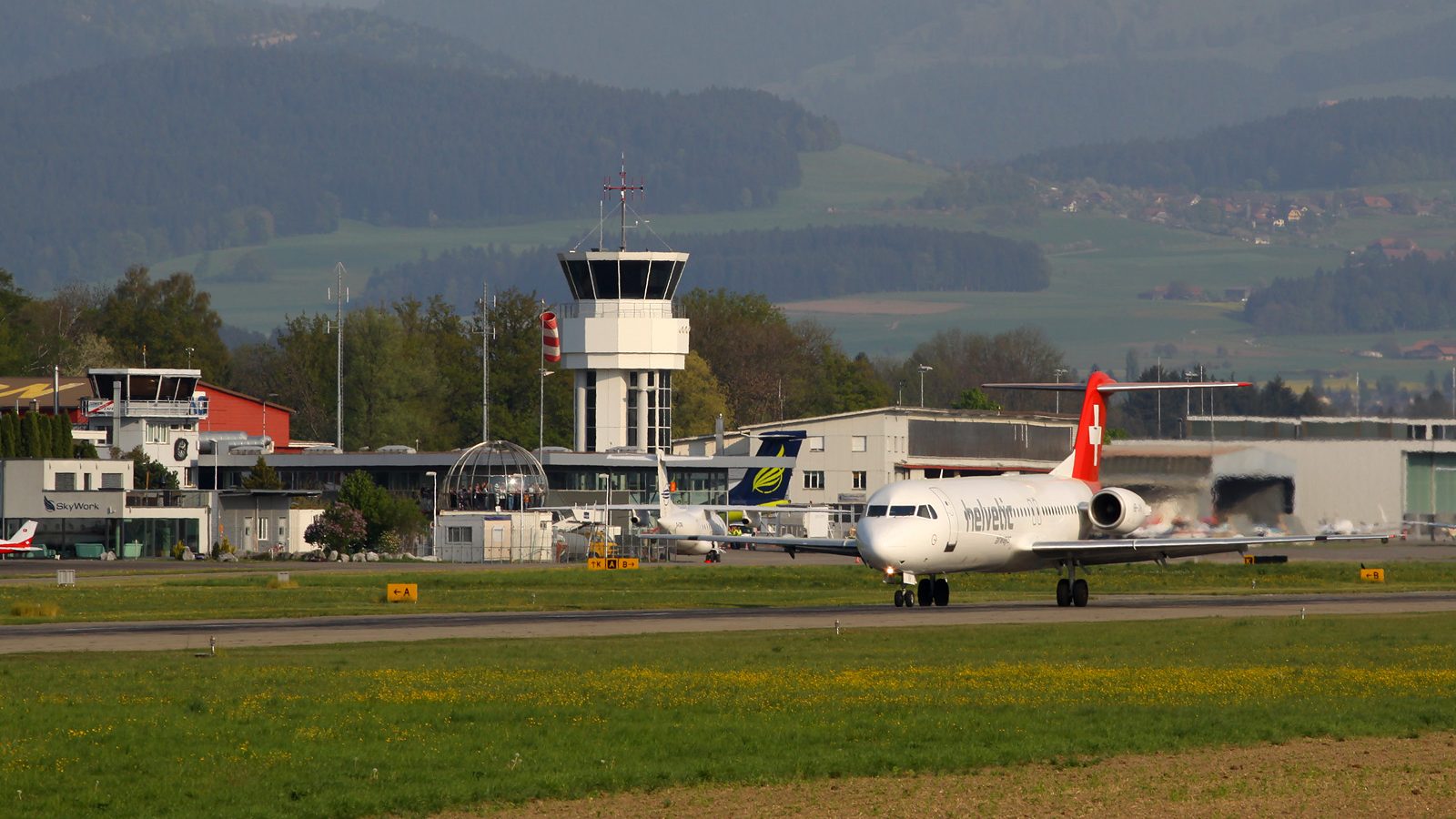
Paved runway 14/32 at 1,730 m (5,676 ft) plus a 650 m grass strip 32L/14R, with ILS on 14. A short-field Swiss capital alternative when Geneva and Zurich are slot-bound - useful when a client insists on Bern proper and does not want the drive from either main field.
10. Innsbruck (LOWI)
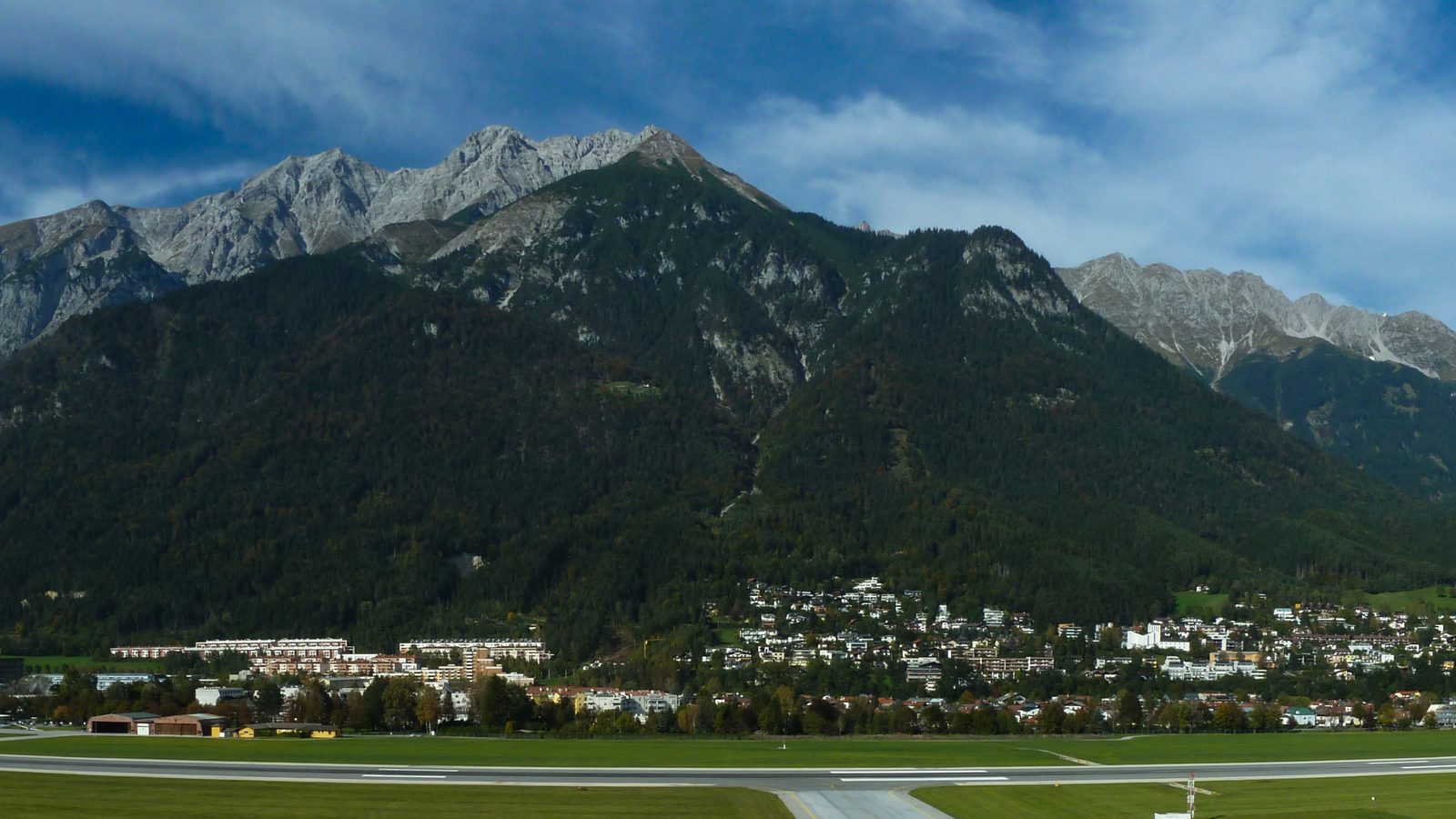
A 2,000 m runway in a valley with terrain rising to 9,000 ft within a few miles. BALPA's description of the crew requirement is the quote to use: Special crew training is required with an annual trip to the simulator rostered. This is a Category C airfield so the captain is the handling pilot. The Special Approach Procedure East requires Austro Control authorization. Do not book an operator into Innsbruck without confirming type and crew qualification.
11. Courchevel Altiport (LFLJ)
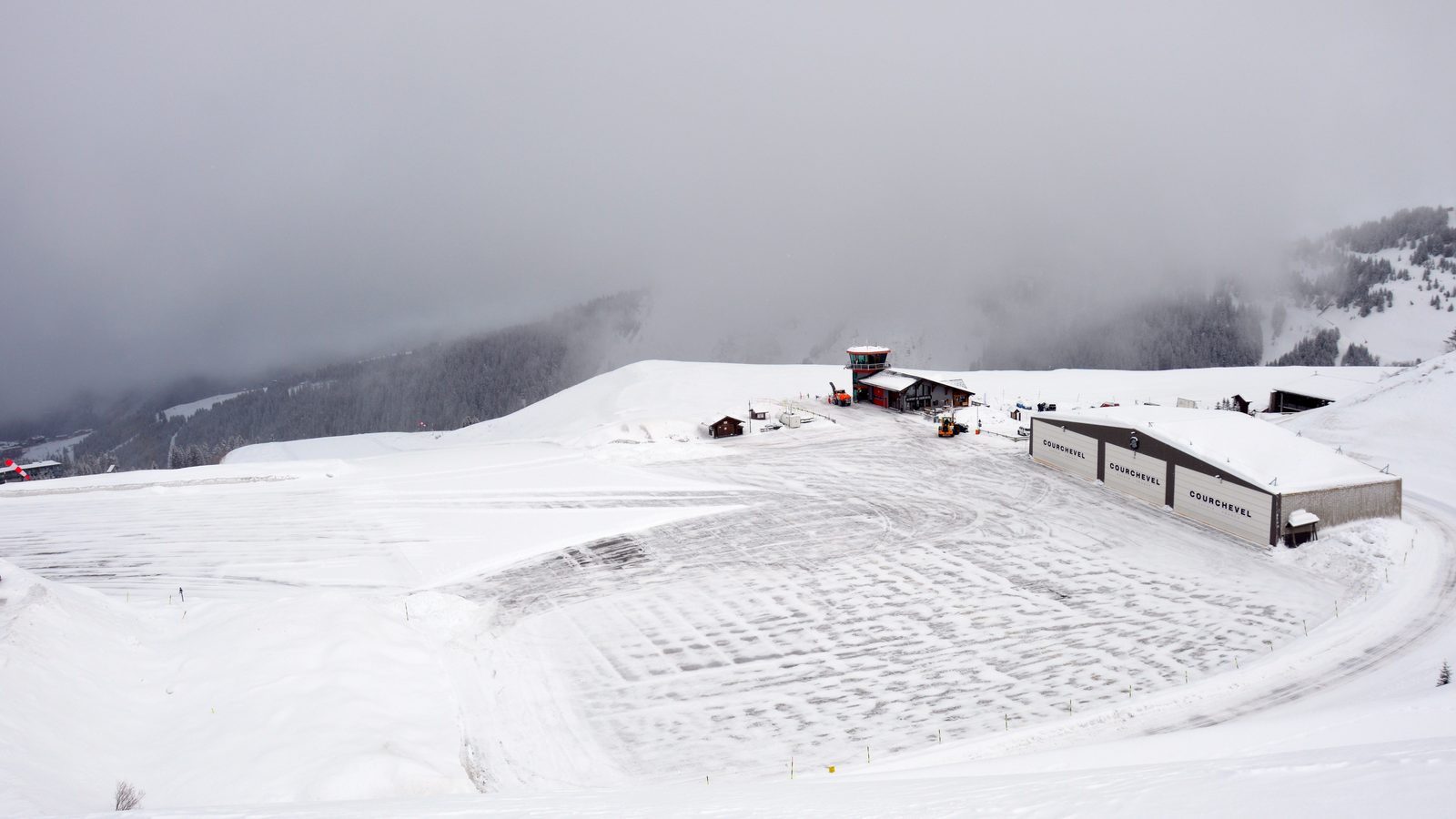
1,758 ft of paved runway with an 18.66% gradient, elevation 2,006 m (6,580 ft), day VFR only. AOPA: It's the shortest, highest paved runway in Europe, and with an 18.66-percent gradient slope, it's by far the steepest. All landings are on Runway 22 and all takeoffs on Runway 4 regardless of wind; one end is 205 feet higher than the other; the touchdown target is the first 300 feet; tires leave the pavement in under 600 feet on departure; and at a point on final pilots are committed to land because there is no possibility for a safe go-around. This is echoed by the Courchevel Altiport entry noting no go-around procedure.
12. Ibiza (LEIB)

14,694 private jet operations in 2023, of which 8,220 - over half - fell in June-August, including more than 800 business aviation movements in July 2023 alone. LEIB runs a slot-coordinated schedule between late June and mid-September, handles business aviation through a dedicated general aviation zone on finite ramp space, and departures on Sunday evenings from LEIB are among the most contested movements in European business aviation across the summer calendar.
Three honourable mentions
Wichita Eisenhower (KICT)
Two main runways, 1L/19R at 10,301 ft and 1R/19L at 7,302 ft, handle every current business jet without restriction, across 3,248 acres at 1,333 ft elevation, and multiple FBOs including Signature and Yingling Aviation. Wichita is the historical heart of the US business aviation manufacturing industry - Beechcraft, Cessna, Bombardier Learjet and Hawker were all founded or substantially based there. The third runway 14-32 is 6,301 x 150 ft.
Fort Worth Meacham (KFTW)
900 acres five miles north of downtown Fort Worth, marketed as North Texas' premier corporate and general aviation facility, with FBOs including American Aero FTW - an 85,000 sq ft facility opened in January 2017 and Texas Jet.
St Barthelemy (TFFJ)
Runway 650 m / 2,170 ft, described elsewhere as 2,100 ft x 60 ft, taking aircraft up to 19 passengers. St Barth's approach is not for the aircraft catalogue - it is for a very specific list of type-rated, current pilots operating specific short-strip aircraft.
How this list actually helps you
Read your quote for the airport code, not just the city. If the broker quotes CDG for Paris on a private jet, ask why. If they quote LAX for a Los Angeles arrival, ask why. There are usually good reasons - overnight parking, MTOW, curfew, customs - but you should hear them, because the choice of field changes both the price and the time on the ground more than the choice of aircraft does.